
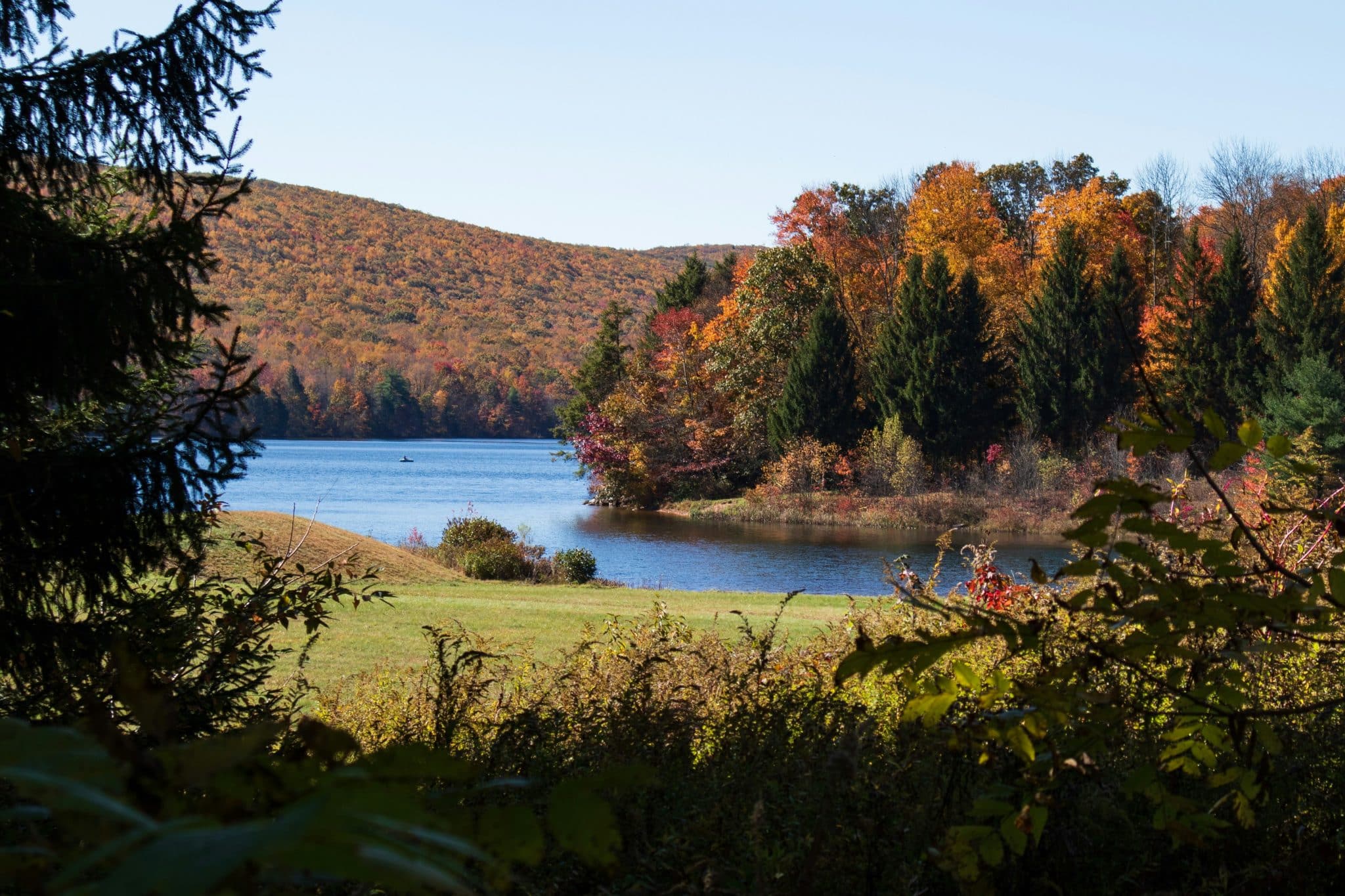
At ESI, some of our recent work has focused on quantifying the economic and fiscal value of open space, trails, and outdoor amenities. From return-on-environment analyses to trail impact studies, we are increasingly seeing outdoor recreation move from a “nice to have” amenity to a central pillar of economic competitiveness.
As Pennsylvania and other states invest in parks, trail networks, conservation landscapes, and downtown revitalization, the outdoor recreation economy has emerged as a powerful intersection of environment, workforce, tourism, and community development.
To explore this evolution more deeply, we sat down with Silas Chamberlin, historian, author, conservation leader, and Chief Strategy Officer of the York County Economic Alliance. Silas has spent his career at the intersection of heritage, trails, and economic development — and is currently writing what may become a defining book on America’s trillion-dollar outdoor recreation economy.
This conversation comes at an exciting moment. Rebecca Garvin DeJoseph, ESI Senior Vice President and Principal, will also be speaking on a panel at the upcoming Pennsylvania Outdoor Economy Summit & Industry Expo, hosted by the Outdoor Business Alliance of Pennsylvania, where she will be discussing how economic impact modeling and open space valuation can help communities make smarter, more strategic investments in outdoor infrastructure.
ESI’s Q&A with Silas connects history, economics, and the future of quality of place.
You’ve worn many hats throughout your career: historian, author, conservation leader, economic development executive. Can you share a bit about your professional journey and how those roles connect to the work you’re doing today?
 I often tell people I spent half of my career in conservation and half in economic development, but you’re right in assuming the various parts of my career are far more connected than that. I can’t pin down the moment I decided to make a career of merging my interest in environment, history and community, accepting a paid graduate student internship at the Delaware & Lehigh National Heritage Corridor was an inflection point. I saw a flier saying the 5-county nonprofit wanted someone who likes “trails and history,” and that was the beginning of leaving my dreams of being a college professor behind.
The reality is, however, that my career has felt to me like a linear progression because every role I’ve ever been in has been about articulating and leveraging the power of heritage and nature to improve quality of life. At the D&L NHC, I was helping to use nineteenth-century canal towpaths and railroad corridors to piece together a 165-mile trail to revitalize communities along its path. I ended up doing the same thing as executive director of the Schuylkill River National Heritage Area, where we were building the Schuylkill River Trail from Philly to Pottsville, with the goal of helping communities “return to the river,” which they had turned their backs on during decades of contamination from industrial waste and coal culm.
In my current role as Chief Strategy Officer with the York County Economic Alliance, I lead economic strategy for a county of 450,000 residents and oversee a broad portfolio of capital projects, loan and grant programs and government relations, but at the heart of our work is a focus on quality of place—parks, trails, walkable downtowns, arts, heritage, culture—and quality of life—close to home recreation, access to childcare, transportation equity, attainable housing.
Even as a full-time economic developer, I continue to find outdoor recreation an especially compelling tool for achieving conventional economic goals because it creates opportunity without the tradeoffs associated with other types of development. Outdoor economy strategies are first and foremost about quality of life for locals.
Your first book, On the Trail: A History of American Hiking, explores the cultural and historical roots of outdoor recreation. What inspired you to write it, and how has that historical perspective shaped the way you think about today’s outdoor economy?
In the winter of 2003, I was an undergrad at Temple University studying history, and I was looking out of a gloomy window in Gladfelder Hall, across a gray north Philly, when I decided I would apply for a summer job building trails in the Adirondacks. That experience—backpacking for five nights at a time into the High Peaks wilderness to build footpaths and rock staircases with hand tools—was formative in a bunch of ways. I started to think about my employer, the Adirondack Mountain Club, and its rich history. And that led me to think about our rival trail crew at the Appalachian Mountain Club and their history. And then I started questioning whether Pennsylvania had similar trail clubs and whether anyone had documented their history. Answering that question eventually became my master’s thesis, then asking the same question about the rest of the nation eventually became my Ph.D. thesis, and ultimately my book.
On the Trail came to focus on the shift from what I called the producer hiker to the consumer hiker at roughly the same time that American hiking culture became a mass phenomenon in the late 1960s. In the historical arc of hiking culture, it’s difficult not to see this as a declension narrative because the rise of solo backpacking, leave no trace, ultralight gear, national outdoor brands, hyper-consumerism, magazines, and other trends culminating in the late twentieth century led to the unraveling of organized hiking and hiking clubs, and undermined the volunteer ethos that made hiking such a resilient and rich part of our American culture for more than a century. These same trends, however, set outdoor recreation on a trajectory that would several decades later lead—by 2025—to more Americans participating in outdoor recreation than at any time in history and the outdoor industry surpassing $1 trillion in economic output for the first time.
You’re now working on your second book. Can you give us a preview of its focus and how it builds on (or diverges from) your earlier work?
My second book is tentatively entitled Wild Profits: Exploring America’s Trillion-Dollar Outdoor Recreation Economy and is under contract with Island Press, which was just acquired by Princeton University Press. The book is intended to be the first holistic examination of the modern outdoor economy and explores the work of economic developers, policy makers, business owners, journalists, community advocates, business leaders, and environmentalists at the front lines of the outdoor economy.
Despite the growing perception that the outdoor economy is worthy of legitimate consideration, it remains relatively obscure within discourse about economic development, community planning, and strategies for revitalization. Wild Profits attempts to further elevate and enrich readers’ understanding of this emerging sector by providing a framework for its economic impact; its historical roots; the various ways communities, regions, and states have sought to leverage it; and where the sector can and should go in the future. Importantly, case studies embedded within each chapter will represent a range of perspectives and ways of engaging with the outdoor economy so that readers of all backgrounds will find relevant takeaways and best practices for their work.
The book does not shy away from identifying weaknesses and yet-to-be-realized opportunities within the sector—from growing the racial and socio-economic diversity of the outdoor recreation community and outdoor-oriented businesses to transitioning the outdoor economy away from sub-living-wage job creation dominated by service sector work.
I’d love to tell you to look for it “soon,” but I make progress when I can, and realistically intend to have the manuscript wrapped up later this year. Stay tuned!
At ESI, we’re seeing many of these themes play out on the ground. Our team has been working with counties and municipalities to quantify the economic and fiscal impact of trail networks, open space investments, and outdoor amenities — from return-on-environment analyses to modeling visitor spending, property value effects, and broader workforce attraction dynamics. Communities are increasingly asking not just whether parks and trails matter economically, but how to measure and maximize their impact.
The growing demand for data and strategy suggests something deeper than a temporary spike in participation. The outdoor recreation economy seems to have experienced a renaissance during and after the pandemic, but this momentum appears to be durable rather than temporary. What do you attribute that sustained growth to?
I agree the momentum behind the outdoor economy does not seem temporary or a momentary fad. I think a lot of this authentic momentum is attributable to the pandemic and the immediate post-pandemic recovery, when civic and business leaders across the county recognized outdoor assets and outdoor recreation helped sustain economic activity and community wellbeing during a period of dramatic social and economic turmoil. When given the chance to allocate millions of dollars in federal CARES and ARPA funding for their post-pandemic recovery, many communities chose to invest in trail networks, recreation organizations, and more open space alongside other more conventional economic and community priorities.
I also think the outdoor recreation satellite account data published by the federal Bureau of Economic Analysis is responsible for some of the traction behind the outdoor economy. It’s hard to ignore a $1 trillion industry, especially when it dwarfs some of the legacy industries that receive much more attention, yet have less influence on our economy. I do worry, however, what the reaction will be the first time the BEA data shows the national outdoor economy shrinking. Will that suck the wind out of this movement? It shouldn’t, but it’s a reminder not to become overly reliant on federal data and “big numbers.”
Finally, we have done a good job of building infrastructure to maintain this momentum. Today, 24 states have offices of outdoor recreation, and many have outdoor business alliances. Nationally, the Outdoor Industry Association and the Outdoor Recreation Roundtable provide industry-wide advocacy and convenings around major issues. Their work is complemented by strong trade associations for specific industries, such as fishing, boating, hunting, and tourism. In Pennsylvania, we now have an Office of Outdoor Recreation, founded in August 2023 by Governor Shapiro, and we have the nonprofit Outdoor Business Alliance of Pennsylvania, created in September 2025 after a year-long engagement process with outdoor business across the state. I have been honored to serve as the first executive director of the OBA PA, during this start-up phase, as we begin to coalesce the outdoor industry and invest in its growth. With all these organizations pushing in the same direction, I think we can keep the outdoor economy top of mind nationally and at the state level.
Looking ahead, where do you see the most significant growth opportunities within the outdoor economy — geographically, sectorally, or in terms of workforce and innovation?
Until now, I don’t think advocates for the outdoor economy have had the luxury to be anything but celebratory about the impact of outdoor recreation. The goal was to establish outdoor recreation as a legitimate industry worthy of attention and investment. Now that we seem to have accomplished that, I think we’ll see a shift to addressing some of the shortcomings of the outdoor economy as it exists today. I hope this shift will manifest in a few ways.
First, we can focus on creating quality jobs within the sector. I live in York County, PA, where 5,240 of my neighbors work in the outdoor economy. We’ve seen that employment figure grow 10 percent in the last decade. The average outdoor recreation job, however, pays less than a living wage. We can’t promote the outdoor economy as a pathway to economic vitality if it’s a sector that keeps half of its employees on the brink of poverty. To address this, we can draw from the workforce development tactics of other industries: develop apprenticeship programs, pool for benefits and insurance, shift from seasonal to fulltime employment and create pathways to business ownership. We need to treat our outdoor workforce with the care we do our other critical trades.
Second, like most sectors, we need to continue confronting the barriers to participation created by race and income. The latest Outdoor Industry Association participation reports show significant participation increases from traditionally under-represented groups, including Black Americans (+12.8 percent) and Hispanic Americans (+11.8 percent), but outdoor participation still fails to represent the diversity of America itself. Income is one particularly sticky barrier to participating in the outdoor economy because much of its success is based on overconsumption of outdoor apparel and gear from national brands. Consumerism so saturates outdoor recreation that many Americans have come to believe visiting nature requires buying gear before one can “properly” participate. This linking of outdoor recreation with commercial consumption, which historian Rachel Gross calls the “profitable paradox” in her book Shopping All the Way to the Woods, has made outdoor culture less accessible to people with lower incomes. Perhaps ever-growing consumption, the basic premise of the BEA data capturing the industry, is not the best way to gauge whether our outdoor economy is delivering positive outcomes.
Finally, until recently, most discussions of the outdoor economy focused on a handful of states and mountain towns with iconic recreation opportunities or demonstrating the macroeconomic impact of the industry. That’s slowly changed thanks to the work of the Outdoor Recreation Roundtable and state offices of outdoor recreation lifting stories and documenting successful outdoor economies in less conventional places. I believe this trend needs to accelerate to the point that we see the outdoor economy almost everywhere. Thanks to cellphone data analysis we can understand how even a single municipal park with a ballfield and walking path can be a catalyst for a local outdoor economic ripple effect. Earlier this year, the closure of a single gas pump in the tiny northern Pennsylvania town of Germania led to the Governor intervening to ensure ATV riders could fuel up and local businesses didn’t miss out on their patronage. Our increasing ability to understand how single businesses and assets constitute the trillion-dollar industry will broaden and enrich our understanding of the outdoor economy.
We often talk about outdoor recreation as a sector in its own right. But in our own work, we’ve seen how its influence extends well beyond the sector itself. When speaking with small, locally owned businesses located near trailheads, riverfronts, and park systems, we consistently hear how proximity to these amenities drives foot traffic, extends dwell time, and strengthens customer loyalty. For many cafés, outfitters, breweries, and even professional service firms, nearby open space is not incidental — it’s part of their value proposition. So, how can investment in trails, parks, and outdoor amenities help attract businesses that are not directly tied to outdoor recreation? In other words, how does quality of place translate into broader economic competitiveness for Pennsylvania?
This is probably one of the most exciting things about where the outdoor economy (and economic development generally) is going. Each year Site Selection magazine conducts a national survey of corporate executives about what site selection factors are driving their decisions about where to make their next business expansion investment. This is a conversation historically dominated by things like corporate net income tax rates, state incentives packages, the rigor of environmental regulation, the cost of energy and all the things that policymakers typically point to when they are describing a “business friendly climate.” Unfortunately, this has led to a race to the bottom, in which communities believe they must give up environmental quality and quality of place to attract business.
However, it turns out that when you tally up those survey results—like I did—between 2013 and 2025, the highest ranked site selection factor by corporate executives has been quality of place. 82% say quality of life outranks corporate income taxes and financial incentives, when deciding on their next business location. Quality of life outpaced lax environmental regulations by 13 points and expedited permitting by 12 points. Since 2020, the number of corporate executives who consider quality of life important to site selection grew by 4 points to 86%, a full 20% higher than environmental regulations and 19% higher than expedited permitting.
This development is all about talent. At the end of the day, executives need to attract and retain talent. In a world of increasingly mobile talent and hybrid work, people don’t willingly follow their employer to places with low quality of life. Quality of life isn’t just outdoor recreation, of course, and that’s exactly why it’s such a powerful realization. We need a statewide economic strategy that weaves together parks, trails and open space with attainable housing, better access to childcare, transportation equity and broadband access. This should empower outdoor economy leaders to work beyond our silos with other coalitions that are well-established and already advancing bold advocacy agenda.
Governor Shapiro has laid the groundwork for this with the first statewide economic development plan in decades, his support for both the Office of Outdoor Recreation and the Outdoor Business Alliance of Pennsylvania and his recent launch of the statewide Housing Action Plan. But it will take concerted effort, time, and resources to shift a paradigm that has long seen quality of life as separate from economic development and discounts the importance of outdoor recreation.
Rebecca Garvin DeJoseph, Senior Vice President for Talent Development & Principal | [email protected]
 Rebecca Garvin DeJoseph is Senior Vice President for Talent and Principal at ESI. Her work often focuses on helping clients understand how economic trends, labor market conditions, and public investments shape regional growth and competitiveness. She works closely with clients to evaluate the economic implications of major investments and to communicate complex analytical findings to leadership and stakeholder audiences. Prior to joining the firm, Rebecca served as a Senior Economist in the Economic Analysis and Information branch of the U.S. Bureau of Labor Statistics, where she provided regional labor market analysis to policymakers, business leaders, and the media.
Silas Chamberlin, Chief Strategy Officer and Vice President, Economic & Community Development, York County Economic Alliance | [email protected]
 Silas Chamberlin is Chief Strategy Officer and Vice President of Economic and Community Development at the York County Economic Alliance, a position in which he serves as executive director of the Redevelopment Authority of the County of York and oversees economic financing, business attraction, entrepreneurship, and workforce development initiatives throughout York County. In 2020, Silas led the creation of York County’s new 10-year economic development plan, which ultimately convened 1,000+ stakeholders to cast a bold vision for people-focused and place-based economic development.