
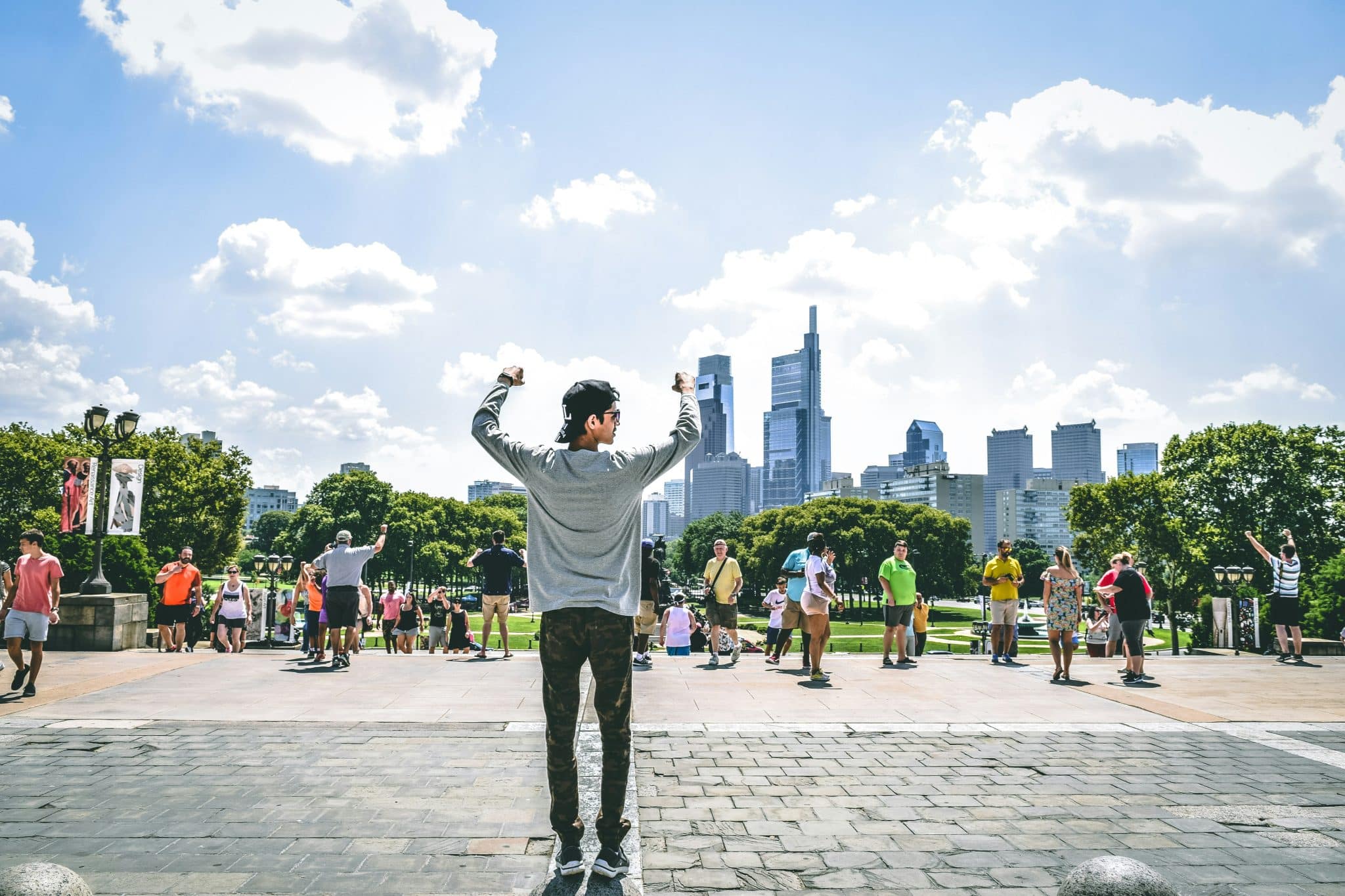
In the coming weeks, Philadelphia will host the FIFA World Cup, MLB All-Star Game, and celebrate the 250th anniversary of the formal adoption of the Declaration of Independence. For the city that hosted the Continental Congress, the Constitutional Convention, and the Centennial Exposition, all this activity might seem like a birthright. But from the perspective of the city and civic leaders who laid the groundwork in the 1990s, Philadelphia’s current ability to compete for and host major events surely did not feel inevitable.
A City at a Crossroads
In the early 90s, Philadelphia was still absorbing the consequences of decades of deindustrialization and urban flight. The manufacturing base that had once anchored its economy had contracted sharply. The city’s population had fallen by nearly 500,000 from its peak of more than 2 million in the 1950s. And the city’s fiscal condition was precarious enough that insolvency was a genuine concern at the start of then-Mayor Ed Rendell’s first term.
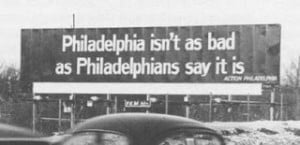 The city was also suffering from an image crisis. On top of news reports that associated the city with crime, economic decline, and impending bankruptcy, Philadelphian’s themselves were often the city’s harshest critics. The sentiment was so pervasive that a local booster group in the 70s rented a billboard that infamously declared that “Philadelphia isn’t as bad as Philadelphians say it is.”
Amid a range of existential challenges, Rendell and other civic leaders set out a vision of strategic investments towards the goal of growing tourism and hospitality as a replacement industry to help compensate for loss of accessible jobs in manufacturing and other declining sectors. Manufacturing is an export activity in the traditional sense, with goods produced in the city and then sold to the world, bringing dollars back to Philadelphia. Tourism represents a modern analogue, attracting external dollars to create local jobs and tax revenues. The difference is that what Philadelphia was selling was an experience, and that experience needed to be intentionally built, curated, and marketed.
Building the Platform
The strategy that emerged mixed tangible infrastructure investment with promotional spending. The Pennsylvania Convention Center opened in 1993, giving the city the capacity to compete for the national conference and tradeshow market. Investment in the Avenue of the Arts transformed South Broad Street into a cultural corridor anchored by new and expanded performing arts venues. Sports stadiums in South Philadelphia were rebuilt and modernized. The new Independence Visitor Center gave tourists a front door to the historic district, which included the new Liberty Bell Center and National Constitution Center. Hotel inventory grew alongside this investment in response to the initial wave of new visitors that it brought, with downtown hotel supply nearly doubling within a decade.
Alongside the brick-and-mortar investments came dedicated promotional infrastructure. Visit Philadelphia was founded to promote the city explicitly as a leisure tourism destination as an initial three year experiment in 1996 – and just celebrated its 30th anniversary this month. The Philadelphia Convention and Visitors Bureau worked to fill the Convention Center’s calendar and land large-scale events. And Philadelphians have embraced the growing attention and improving image of the city, without losing the authenticity and lack of pretense that is central to the city’s visitor experience.
The city attracted the Republican National Convention in 2000, the Democratic National Convention in 2016, a papal visit, the NFL Draft, and a sustained run of major sporting events. With each success, the city has continued to grow its capacity and confidence to pursue the next one.
Tourism as Economic Development
Philadelphia’s strategic bet on a tourism and hospitality revival benefitted from its alignment with broader cultural forces reshaping American cities at the turn of the 21st century. Both young professionals and empty nesters were increasingly seeing the benefits of urban living, with Philadelphia leading the way in its attraction and retention of college graduates. Sparked by a lower cost of living, Philadelphia arts and culture and dining scenes produced world class talents, adding to the amenities and experience for residents and visitors alike.
This alignment is not coincidental. The qualities that make a city an attractive place to visit are the same qualities that make it an attractive place to live. Philadelphia – and the entrepreneurs making up its growing dining scene, its arts experiences, and its nighttime economy – found that tourist and resident markets are not separate but reinforce each other.
This dynamic has become even more important as Philadelphia has navigated the challenges of the post-pandemic period. As hybrid work has thinned the commuter population and reduced office demand, Philadelphia has leaned on the strategic strength of one of the largest downtown residential populations in the city and the continued pull of its visitor experience and attractors.
The Current Moment and the Future Opportunity
Philadelphia’s tourism industry has been preparing for 2026 since well before the pandemic, chasing major events and developing the infrastructure to host an influx of visitors. The year has finally arrived and the breadth of coverage the city has received illustrates its success in extending its brand well beyond the historical context of this milestone year. Travel publications and lifestyle outlets are placing Philadelphia on national and international lists of must-visit places for 2026 and are using the occasion to write about the city’s dining scene, its arts institutions, its walkable neighborhoods, and other reasons to visit focused on the present rather than the past.
That shift in perception is what a generation of strategic investment and tireless promotion has produced. The economic returns on this strategy extend well beyond the duration of any one event, or even a blockbuster year full of them. Tourism and hospitality has been among the fastest growing sectors for working Philadelphians, producing jobs across a range of skill and education levels. Visitor spending generates a flow of wage, sales, amusement, and other tax revenue sources for the city, funding services that benefit residents who never set foot in a hotel. And urban amenities that visitors help to support continue to help anchor neighborhoods and draw residents to Philadelphia.
When the summer of 2026 is in the rearview mirror, Philadelphia will not be done competing, with the city’s current bid for the 2028 Democratic National Convention illustrating its continued ambition. Philadelphia has developed the infrastructure – both physically through its venues, hotel inventory, workforce and amenities, and through its promotional ecosystem – to compete on a scale that aligns with its proud history. This tourism revival is the payoff on decades of strategic investment and work, and its benefits to the city and its residents spill well beyond those working in the industry.
Ethan Conner-Ross, Executive Vice President & Principal | [email protected]
 For more than a decade, Ethan has helped clients plan for, quantify, and demonstrate the economic and social impacts of their activities. Ethan’s work with government, quasi-public, and private sector organizations, combines sound analytical techniques with practical insights to help define and communicate findings. He has led policy studies at the state and local level, economic assessments of a range of projects or proposals, and planning efforts focused on the fiscal impact of land use and economic development choices. Prior to joining the firm, he worked at Visit Philadelphia, a nonprofit organization that promotes tourism in the Greater Philadelphia region. He rose to the position of Vice President of Research and Planning, directing the organization’s market research program, supporting data-driven corporate communications, and leading agency-wide planning.